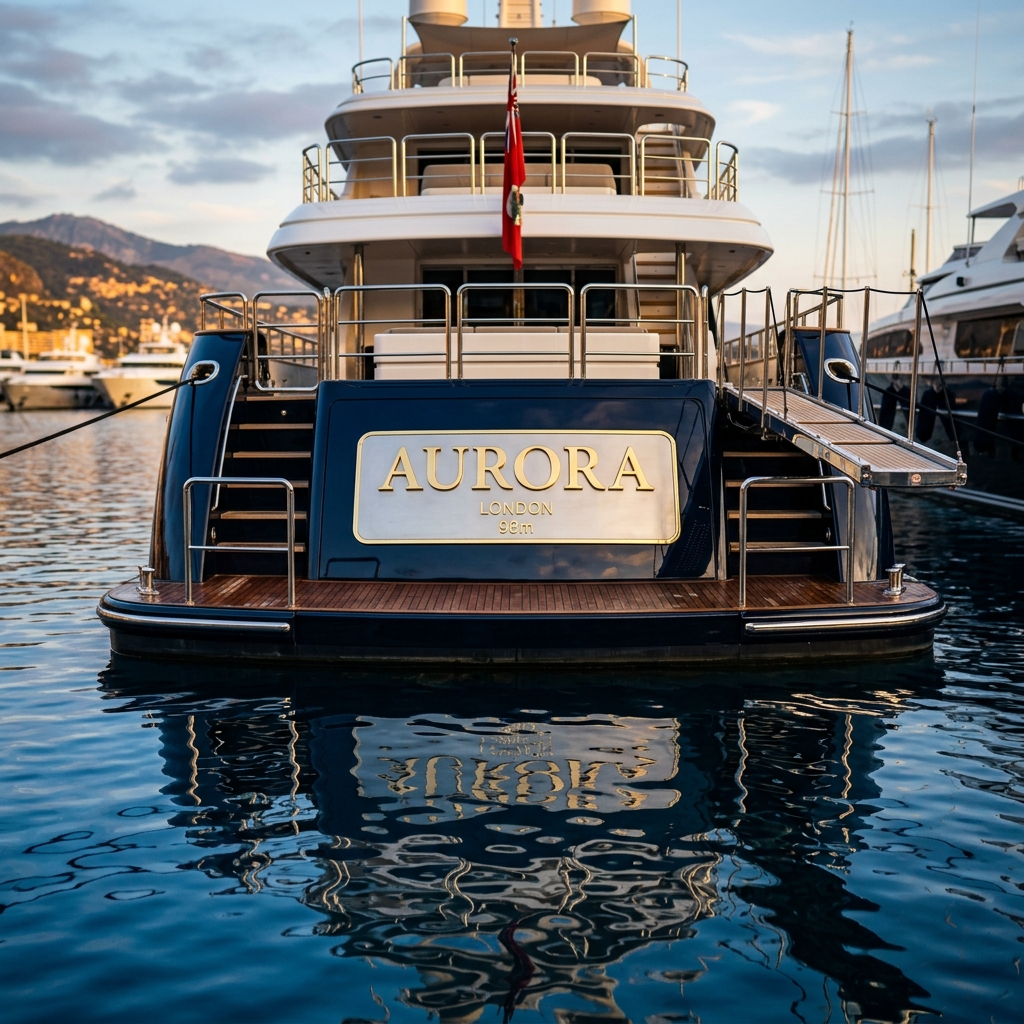
Featured Snippet: Yacht Charter vs. Owning
When analyzing yacht charter vs owning, chartering is vastly superior for the majority of UHNW individuals. Purchasing a $20M superyacht requires an ongoing commitment of roughly $2M annually in maintenance (the 10% rule), plus 20-30% initial depreciation. Conversely, chartering allows a billionaire to spend that same $2M on four weeks of elite vacations aboard different, ultra-modern vessels around the globe, while keeping their primary capital aggressively invested elsewhere.
The allure of outright superyacht ownership is undeniably powerful. A 60-meter custom Feadship anchored off the Cap d'Antibes is the ultimate terrestrial status symbol—a floating micronation over which the owner exerts absolute sovereignty.
However, when we move past the romance of the sea and analyze the data through the cold, pragmatic lens of wealth management, a fascinating trend emerges: an increasing number of billionaires, hedge fund managers, and tech founders are actively choosing to liquidate their maritime assets in favor of full-time chartering.
As an elite maritime concierge navigating the portfolios of the ultra-wealthy, Elite Luxury Bookings frequently conducts this exact financial analysis for our clients. Here is the definitive breakdown of why the world's financial elite are pivoting away from ownership and toward the ultimate agility of the charter market.
Executive Briefing: Table of Contents
- 1. The Financial Reality of Superyacht Ownership
- 2. The 10% Annual Maintenance Rule (The Hidden Sink)
- 3. Asset Depreciation vs. Capital Allocation
- 4. The Geography Problem (Global Agility)
- 5. The Ultimate Privilege: Avoiding Logistics
- 6. When Does Buying Actually Make Sense?
- 7. Frequently Asked Questions
Bypass the Liability
Experience the pinnacle of maritime luxury without the depreciation. Our brokers match you with the world's most spectacular vessels on demand.
Speak to a Charter Specialist1. The Financial Reality of Superyacht Ownership
To understand the pivot toward chartering, we must first look at the raw mathematics of buying a superyacht vs chartering. Let us model a scenario based on a highly desirable asset: a 50-meter (164ft) tri-deck motor yacht.
A high-pedigree, relatively new 50m vessel commands a purchase price of approximately $25,000,000 USD. This initial capital expenditure is merely the entry fee. Unlike real estate, which generally appreciates and generates yield, a superyacht is an aggressively depreciating liability that requires immense, constant cash injection to remain seaworthy.
Let us compare the 5-year outlook of owning this $25M yacht versus chartering a similar vessel for 4 weeks every year.
| Financial Metric (5-Year Span) | Owning a $25M Yacht | Chartering 4 Weeks / Year |
|---|---|---|
| Capital Deployed (Upfront) | $25,000,000 | $0 |
| Annual Operating Costs | $2,500,000 / year ($12.5M total) | $0 |
| Cost of Usage (APA & Fuel) | ~$200,000 / year (4 weeks use) | Base + APA = ~$1,400,000 / year |
| Asset Depreciation (Est 25%) | -$6,250,000 lost | $0 lost |
| Total 5-Year Capital Drain | ~$19,750,000 | ~$7,000,000 |
*Note: This model assumes the owner does not offset costs by placing their yacht into a charter program, which brings its own extensive wear-and-tear complications.
2. The 10% Annual Maintenance Rule (The Hidden Sink)
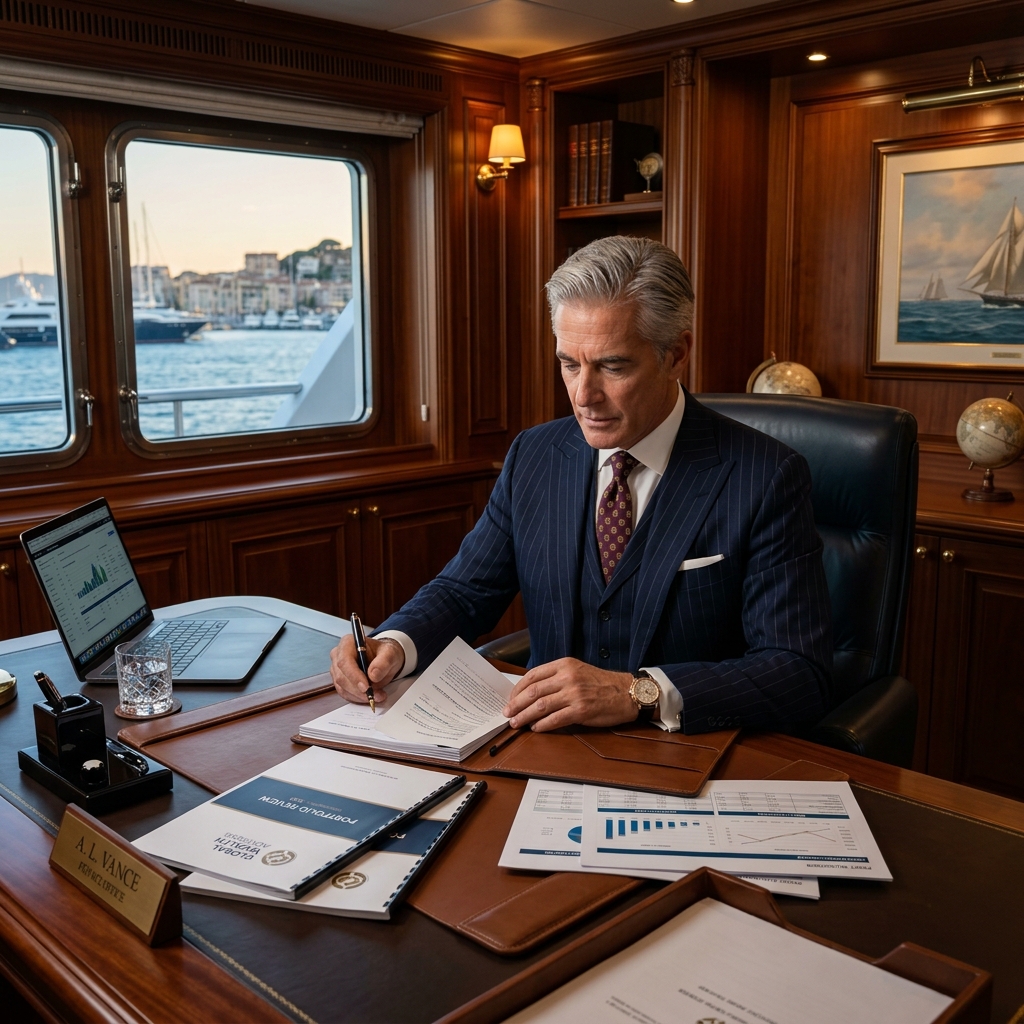
The golden rule of yachting economics dictates that the annual cost of owning a yacht will equal roughly 10% of its initial purchase price. For our $25M vessel, the owner must wire $2.5M annually just to keep the lights on.
Where does this money go?
- Crew Salaries: A 50m yacht requires 10 to 12 full-time, highly trained crew members. A skilled captain alone commands $12,000 to $18,000+ per month.
- Dockage & Mooring: Securing a berth in Port Hercules (Monaco) or Marina Grande (Capri) is astronomically expensive.
- Insurance: Hull and P&I (Protection and Indemnity) insurance for a massive maritime asset.
- Maintenance & Refits: Saltwater is highly corrosive. Teak decks require constant sanding, engines demand rigorous servicing, and every 5 years, the vessel must undergo an intensive, multi-million dollar class survey refit.
When chartering, all of these costs are the sole responsibility of the owner. Your charter fee simply buys you the pristine end-product.
3. Asset Depreciation vs. Capital Allocation
Perhaps the most compelling argument for the financial elite is opportunity cost. Tying up $25,000,000 in a depreciating hull means that capital is not deployed in high-yield equities, private equity, or real estate.
If an investor takes that same $25M and secures a conservative 7% annual yield, the asset generates $1.75M in passive income every year. That $1.75M yield alone is enough to fully fund a spectacularly lavish 4-week charter season aboard a 50m yacht every single summer, without ever touching the principal $25M.
Allow our concierge team to model your specific charter strategy versus ownership costs.
4. The Geography Problem (Why Chartering Offers Global Agility)
Ownership restricts geography. If you own a yacht based in the Mediterranean, and suddenly desire to spend New Year's Eve in St. Barts, you have two highly inefficient options:
- Pay $150,000+ to have your yacht loaded onto a heavy-lift transport ship to cross the Atlantic.
- Pay for massive fuel consumption and crew time to have the yacht undertake a grueling transatlantic crossing on its own hull, enduring extensive wear and tear.
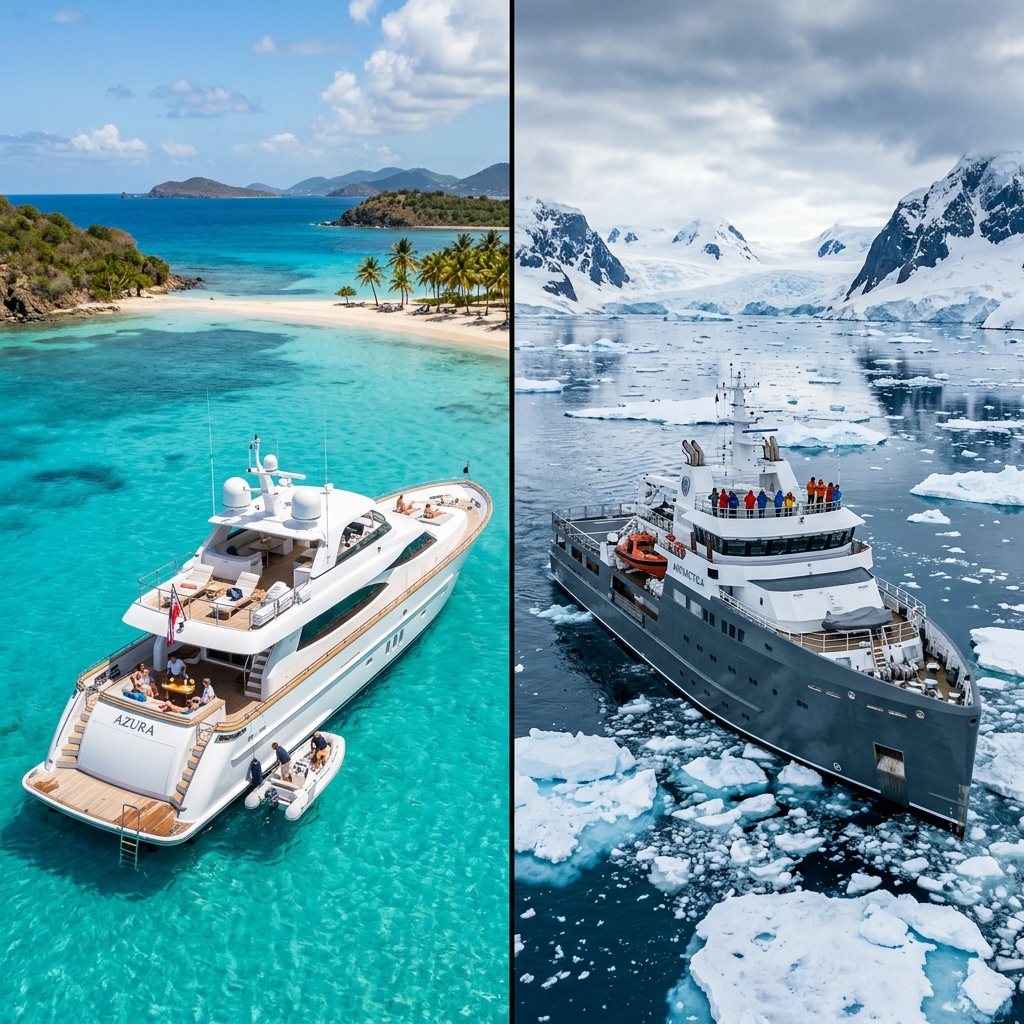
Conversely, the charter client experiences zero friction. In July, they charter an open-style sports yacht for the Amalfi Coast. In December, they charter an entirely different, shallow-draft catamaran in the Exumas. In February, they charter a rugged ice-class explorer vessel in Antarctica. Chartering provides absolute, immediate geographic agility.
5. The Ultimate Privilege: Chartering Avoids the Logistics
True luxury is the absence of logistical friction. For an owner, a yacht is an operating business. When the chief engineer quits mid-season, or the generators fail in port, it is the owner's ultimate liability. They must manage management companies, crew disputes, and shipyard delays.
The charter client bypasses this entirely. They arrive via private jet, step onto a flawlessly prepared vessel, enjoy a perfect vacation, and simply walk away when it is over. If a vessel suffers a mechanical failure prior to a charter, a premier broker will simply substitute a comparable or superior yacht at no additional cost to the client.
6. When Does Buying Actually Make Sense?
Despite the overwhelming financial logic of chartering, ownership remains the correct choice for a specific subset of UHNW individuals. Purchasing a superyacht makes sense only if:
- You intend to spend more than 8 to 10 weeks aboard the vessel every single year.
- You demand absolute, immediate availability of your asset at all times, without having to consult a charter calendar.
- You wish to custom-build a vessel (e.g., adding specialized scientific laboratories, specific art galleries, or hyper-customized layouts) that do not exist on the charter market.
- The financial loss of $3M+ annually is entirely immaterial to your net worth.
Why Buy When You Can Command?
Deploy your capital intelligently. Allow Elite Luxury Bookings to act as your dedicated maritime family office, curating an annual charter portfolio that delivers variety, absolute luxury, and zero depreciation.
Consult a Senior Broker
Frequently Asked Questions
Is it cheaper to charter a yacht or buy one?
For the vast majority of UHNW individuals, chartering is significantly cheaper. The annual operating costs of a superyacht average 10% of its purchase price. If you purchase a $20M yacht, you will spend $2M annually just to maintain it. For $2M, you could charter an elite $500k/week megayacht for four full weeks a year without any depreciation or logistical headaches.
What is the 10% rule in yacht ownership?
The 10% rule dictates that an owner should expect to spend roughly 10% of the yacht's initial purchase price on annual maintenance, crew salaries, insurance, and dockage, regardless of how often the vessel is actually used.
How much does a superyacht depreciate?
Like a luxury vehicle, a new superyacht experiences its steepest depreciation in the first 3 years, often losing 20% to 30% of its initial value. Chartering entirely bypasses this massive capital destruction.
Can I offset the cost of owning by chartering my yacht out?
Yes, many owners place their vessels into charter management programs. However, this dramatically increases the wear and tear on the vessel, requires maintaining a larger, commercial-grade crew, and means the owner must block out their own vacation time around paying clients. It rarely results in a profit; it merely subsidizes the massive running costs.