Featured Snippet: What is the Difference?
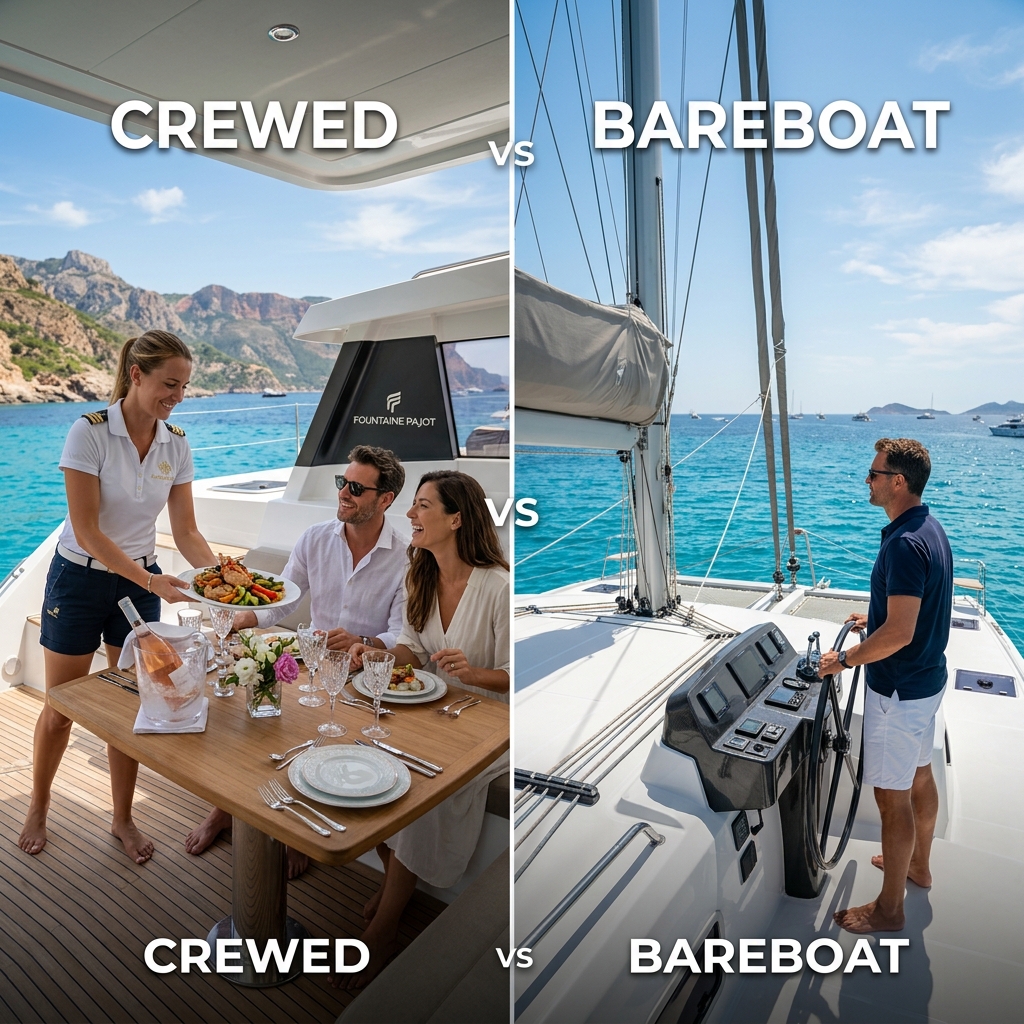
The primary difference between a bareboat vs crewed catamaran charter is service and responsibility. A bareboat charter means you rent the vessel alone; you must possess a valid sailing license to navigate, cook, and clean for yourself. A luxury crewed charter operates like a floating 5-star hotel; it includes a highly trained professional captain, a private gourmet chef, and stewardesses who handle all navigation, mooring, cooking, and bartending.
You have decided to charter a catamaran in the Caribbean or the Mediterranean. The destination is set, the guests are invited, but you now face the most critical decision in the booking process: Do you charter the yacht "bareboat" or fully "crewed"?
This single choice will dictate the entire dynamic of your vacation. While sailing purists often lean toward bareboat for the autonomy, ultra-high-net-worth (UHNW) clients almost exclusively demand crewed vessels. Understanding the logistical, financial, and legal differences between these two models is essential before wiring your deposit.
This is the definitive guide to navigating the bareboat vs crewed catamaran charter debate.
Executive Briefing: Table of Contents
Explore Both Fleets
Whether you hold a Master's license or require a full Michelin-trained crew, our partners offer the most elite catamarans globally.
Browse Catamaran Options1. The Bareboat Charter: Absolute Autonomy
A "bareboat" charter means exactly what it sounds like: you are handed the keys to a bare boat. There is no captain, no chef, and no crew.
This model appeals to experienced sailors who view navigating the vessel as the primary joy of the vacation. You dictate the exact itinerary, you drop anchor whenever you please, and you enjoy absolute privacy with no strangers aboard your vessel.
The Hidden Realities of Bareboat:
- The Workload: Someone must be at the helm. Someone must execute the incredibly stressful task of stern-to mooring in a tight Mediterranean marina with crosswinds. Someone must cook three meals a day for 8 people. Someone must clean the galleys and the heads (bathrooms).
- The Liability: If the boat hits a reef, or if another vessel drags anchor into you at night, you are the legally responsible Master of the vessel.
2. The Luxury Crewed Charter: 5-Star Hospitality
A luxury crewed catamaran charter operates in an entirely different stratosphere of hospitality. You are not renting a boat; you are renting a floating, bespoke luxury resort.
The Captain: Removes all liability and stress. The captain monitors the weather, secures the prime anchorages before they fill up, and acts as a local concierge to book VIP tables at shoreside beach clubs.
The Private Chef: This is the defining factor of a crewed charter. Based on a detailed preference sheet submitted weeks prior, your chef prepares Michelin-quality meals. You wake up to fresh pastries and artisanal coffee, enjoy locally speared lobster for lunch, and dine on multi-course tasting menus at sunset—without ever washing a dish.
The Toys: Crewed yachts typically feature a much larger array of high-end water toys (e-foils, Seabobs, massive tender ribs) because the crew is there to launch, retrieve, and maintain them daily.
3. The Hybrid Option: "Skippered" Bareboat
There is a middle ground. If you do not have a sailing license, but you do not want to pay the premium for a fully crewed, chef-driven superyacht, you can book a "Skippered Bareboat."
In this scenario, you rent the bareboat and pay a daily rate (usually $250 - $350 per day) to hire a freelance captain.
The Catch: The captain is there strictly to safely drive the boat. You are still responsible for provisioning (buying all the groceries), cooking the meals, making the beds, and cleaning the vessel. Furthermore, you must provide a cabin and food for the captain.
4. Qualifications, Insurance & Liability
The barrier to entry for bareboat chartering is strictly regulated.
In the Mediterranean (Greece, Croatia, Italy), maritime law strictly requires the skipper to possess an internationally recognized sailing license, such as an ICC (International Certificate of Competence) or an RYA Day Skipper ticket. A VHF radio operator's license is also frequently mandatory.
In the Caribbean (BVI, Bahamas), regulations are historically slightly looser, often requiring only a "sailing resume" proving you have skippered vessels of similar size. However, insurance companies are rapidly tightening these rules. If you do not have the qualifications, a crewed or skippered charter is your only legal option.
5. Cost Comparison: What Are You Really Paying For?
A bareboat charter on a 45-foot catamaran might cost $8,000 per week. A fully crewed charter on a similarly sized vessel might cost $25,000 per week. Where does the $17,000 difference go?
- The Provisions: The crewed charter fee typically includes thousands of dollars worth of gourmet food, fine wine, and premium spirits.
- The Wages: You are paying the salaries of highly trained maritime professionals (Captain, Chef, Stew) for 24/7 service.
- The Vessel Condition: Crewed yachts are meticulously maintained daily by professionals, whereas bareboats suffer intense wear-and-tear from hundreds of amateur sailors. The aesthetics, linens, and condition of a crewed yacht are vastly superior.
Experience True Luxury
If your goal is absolute relaxation and five-star hospitality, a crewed catamaran is the only choice. Connect with our partners to view global availability.
Secure Your Charter Today
Frequently Asked Questions
What is the main difference between a bareboat and crewed catamaran charter?
A bareboat charter means you rent only the boat. You are fully responsible for navigating, sailing, cooking, cleaning, and mooring. A crewed charter includes a professional captain, chef, and sometimes a stewardess, providing a fully catered, 5-star hotel experience on the water.
Do I need a sailing license for a bareboat charter?
Yes. Most charter companies in the Mediterranean and Caribbean require the skipper to hold an internationally recognized sailing license (such as an ICC, RYA Day Skipper, or ASA 104), plus submit a sailing resume proving experience on similar-sized vessels.
Can I hire just a skipper for a bareboat charter?
Yes. This is known as a 'skippered bareboat' charter. You pay the bareboat fee plus a daily rate (usually $200-$300) for a captain to drive the boat. However, you are still responsible for provisioning, cooking, and cleaning.